
Ask what the action changes
A rate increase changes the price offered to a defined part of the portfolio. Its eventual effect depends on how much business renews, the risks that remain, the timing of the change and the claims costs those risks generate. A portfolio-wide average can conceal very different outcomes beneath it.
Start by making the action explicit: the segment affected, the effective date, the expected rate achieved and the assumptions about volume. That provides a basis for comparing alternatives and for checking implementation later.
Compare scenarios on a consistent basis
A scenario should explain both the premium implications and the expected performance implications. It should also distinguish the current-year effect from the position after the change has fully earned through.
For example, a targeted increase may look different from a uniform increase even when the average intended rate change is similar. Where the rate lands matters. A change in the balance of risks can also affect the portfolio result independently of price. Treat these as assumptions to examine, rather than allowing them to remain implicit.
Use early indicators carefully
Average premium and risk count can help identify whether business is moving as anticipated before sufficient claims experience is available. They are useful prompts for investigation, particularly when compared with a comparable period.
An increase in average premium can reflect changes in exposure, cover or mix as well as rate. Reviewing those measures together helps the team ask a better question: are we writing the business we expected, on the terms we intended?
Explain the movement at the next review
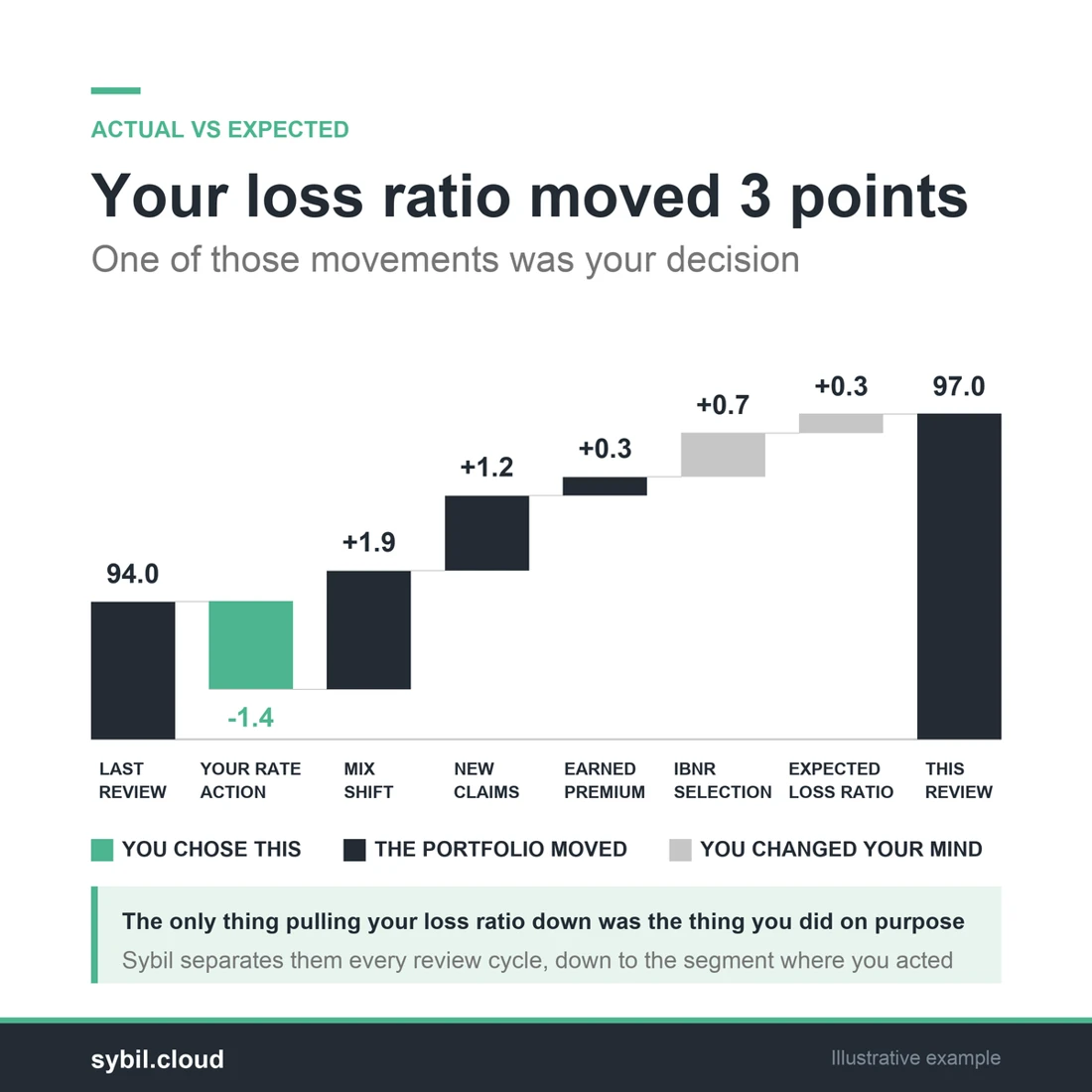
When the loss ratio changes, the net movement does not isolate the effect of the original action. New claims, reserve selections, earned premium, mix and revised assumptions can all contribute.
Keep the previous assessment available. Compare current and prior views, investigate the affected segments and distinguish changes in actual experience from changes in expectation. The outcome should inform whether to continue, refine or reconsider the action.
From a proposal to a testable decision
Sybil supports separate scenarios, comparison with a base assessment and Actual versus Expected review. Together, those capabilities help a team set out what it expects an action to achieve and return to that expectation as the portfolio develops.