
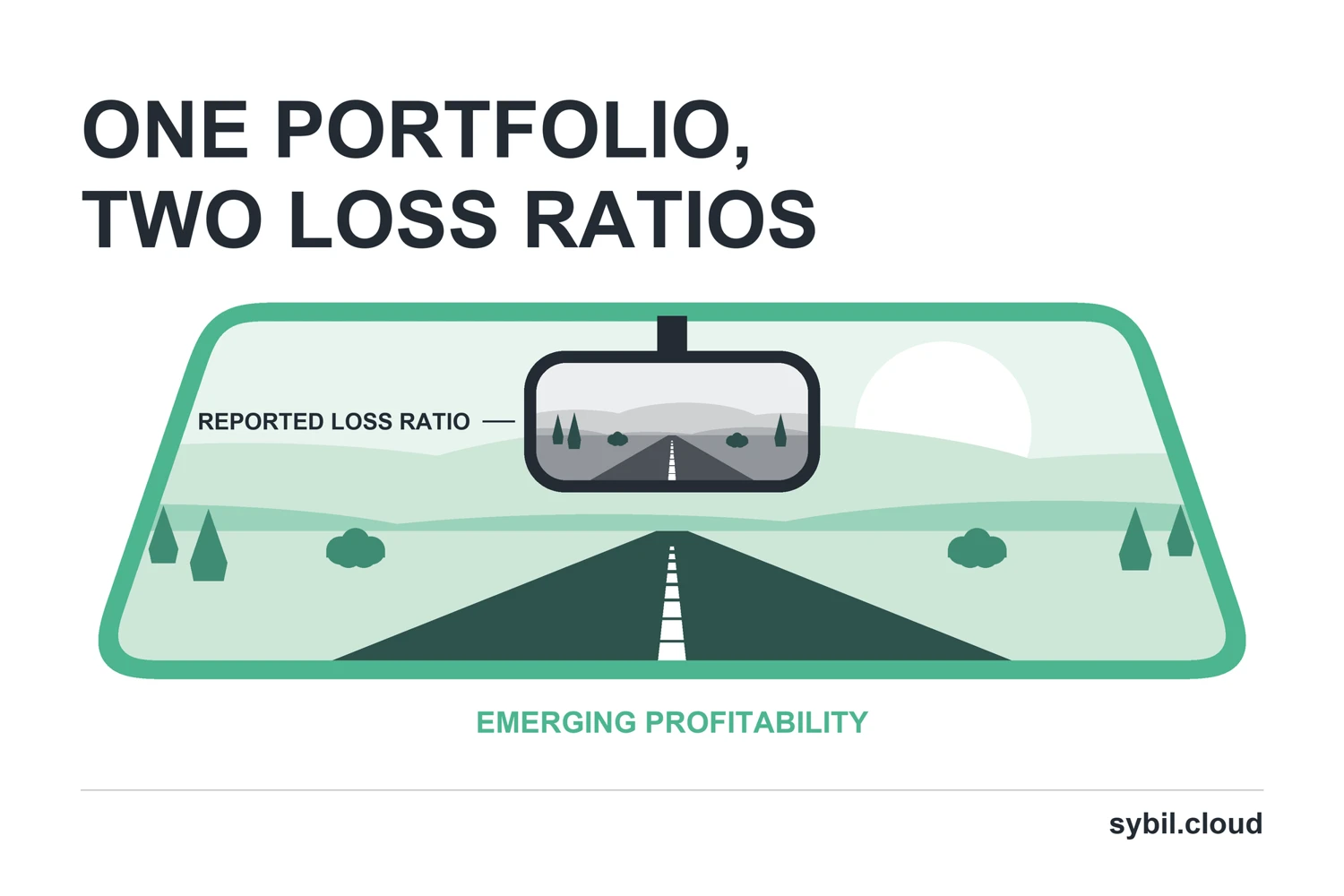
Two valid questions, one underlying portfolio
A reserving team may group claims to achieve sufficient volume for a credible development assessment. An underwriting team needs to decide what to do with a particular product, broker, region or risk group. Both perspectives matter, but their preferred level of detail may differ.
The business therefore needs a way to connect the aggregate reserve selection with the more granular performance view. Without that connection, apparently consistent totals can still give a misleading impression of the segments underneath.
Make the allocation basis explicit
IBNR, or incurred but not reported, allows for claims costs that have not yet emerged in full. Allocating it across a portfolio requires a basis that reflects the available information and the underlying risk.
Premium can be a useful measure, but equal premiums do not necessarily mean equal expected claims costs. Incurred experience also needs interpretation when periods are immature or volumes are small. The basis should be explainable, appropriate to the period and capable of reconciling back to the selected total.
Connect periods as well as segments
Underwriting actions apply to business written in a particular period. Claims experience is often assessed by the period in which events occur. A consistent framework allows the same core assessment to be examined from either perspective.
That matters when a finance discussion and an underwriting discussion concern the same portfolio. The views can answer different questions without requiring separate, competing versions of performance.
Preserve the link when assumptions change
The connection needs to survive the next update. If a reserve selection changes, the portfolio view should reflect that change in a controlled and repeatable way. Teams need to understand what moved and why, rather than rebuilding an allocation exercise each time.
Sybil combines triangle analysis, reserve selections and allocation with portfolio exploration. This allows actuarial assessments to inform the segments where underwriting decisions are made, while retaining a path back to the underlying result.
A more useful review conversation
Start by agreeing the aggregate selection, then examine how it is distributed across periods and segments. Identify which movements come from new experience, which reflect a change in assumptions and which deserve further investigation.
The value is a shared analytical foundation. Finance, actuarial and underwriting can then spend their time discussing the implications.